From the annual — a life, told at length
Miss Doreen D'Souza
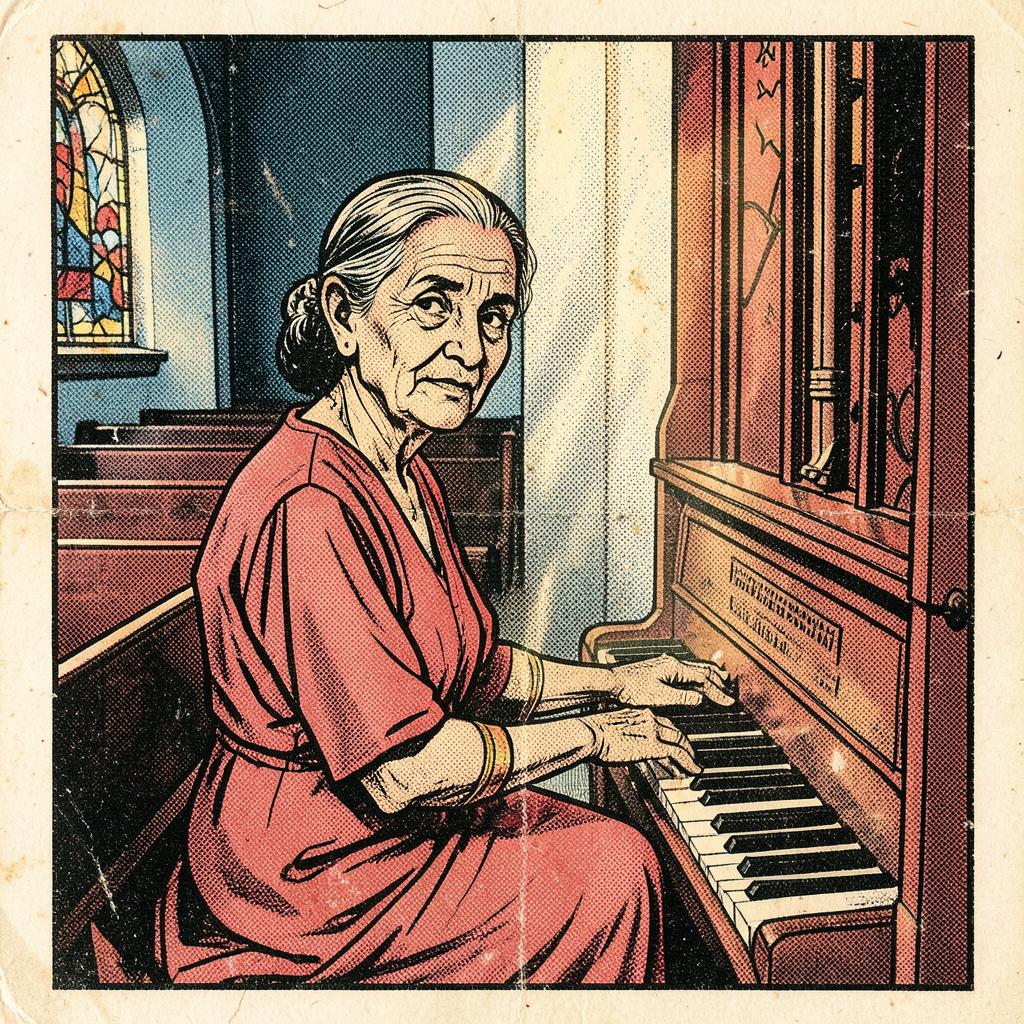
Piano Teacher; Organist, Our Lady of Mercy Church
“Every Sunday she plays for a hall that has been emptying for thirty years.”
The Life, Told at Length
Miss Doreen D'Souza was raised in a tall narrow house behind Our Lady of Mercy, the youngest of four, in a family where music was thought as necessary as good manners and rather harder to teach. Her mother played the piano indifferently and insisted, with the zeal of the self-taught, that all four children learn it properly, which meant an hour of scales every evening before homework, and a teacher who rapped knuckles for a wandering thumb.
Doreen was the only one of the four who took to it without a fight. By fourteen she was playing the offertory hymn on Sundays whenever the regular organist had a cold; by twenty she held the position for good, a fact the parish thought so obviously right that nobody bothered making a formal announcement of it. She has now played that organ, missing only a handful of Sundays to illness, for thirty years.
Her two brothers left in the 1980s, one for Perth and one for Toronto, part of the wider emigration that emptied half the community's pews over that decade, and they built there the ordinary good lives such emigrations produce — houses with lawns, photographs at Christmas, a calendar sent home each January showing a view of somewhere very clean. Doreen stayed, because their mother's health needed someone to stay, and the question of who that someone would be was never much discussed in the family; it simply settled itself, over eleven years, in Doreen's direction.
She teaches piano now on Tuesday and Friday afternoons in the front room of the same tall house, to a changing set of children sent by mothers who remember, fondly or otherwise, being sent themselves. The upright piano is older than most of her students, its high notes a touch sharp in the monsoon, and the room smells of the same lavender talcum her own mother once wore — a smell that has, over three decades, become inseparable from the sound of a C major scale played correctly for the first time.
She keeps her sheet music filed in strict date order in a cabinet by the window, with hymns for the coming month practised a full week ahead in case, she says, her hands should ever disagree with her — a line her students find slightly puzzling and her contemporaries at church understand rather too well, at an age when hands begin, now and then, to have opinions of their own.
There is a story, told more by former students than by Doreen herself, of a recital in 1979 where a boy from a rival school forgot his piece entirely halfway through, and Doreen, seated in the front row as accompanist, played the missing bars from memory under her breath until he found his place again, so quietly that the audience never noticed any substitution had happened at all.
The congregation at Our Lady of Mercy has thinned a great deal since her girlhood — the emigrations carried on long after her brothers left, and the ten o'clock Mass that once needed extra chairs in the side aisle now leaves whole pews empty — but she still plays the postlude in full, every Sunday, to whoever remains in the building, sometimes to almost no one at all, with the same care for phrasing she would give a packed hall.
She has never married, a fact remarked upon less often now than it was twenty years ago, and when the question comes she answers with a brief pleasant word about being very busy with her students, before returning, without any visible effort, to whatever piece of Bach or Fauré happens to be open on the stand.
It is generally agreed in the parish that nobody plays a funeral quite like Miss D'Souza, that she can find, even in the plainest hymn, a way of making the last verse sound like something worth having lived for, and that this, whatever else may or may not be said of a life, is not nothing.