From the annual — a life, told at length
Raghav 'Raghu' Tiwari
Photocopy & STD Booth Operator, Court Compound Gate No. 2
“Everyone's man. Nobody's brother.”
The Life, Told at Length
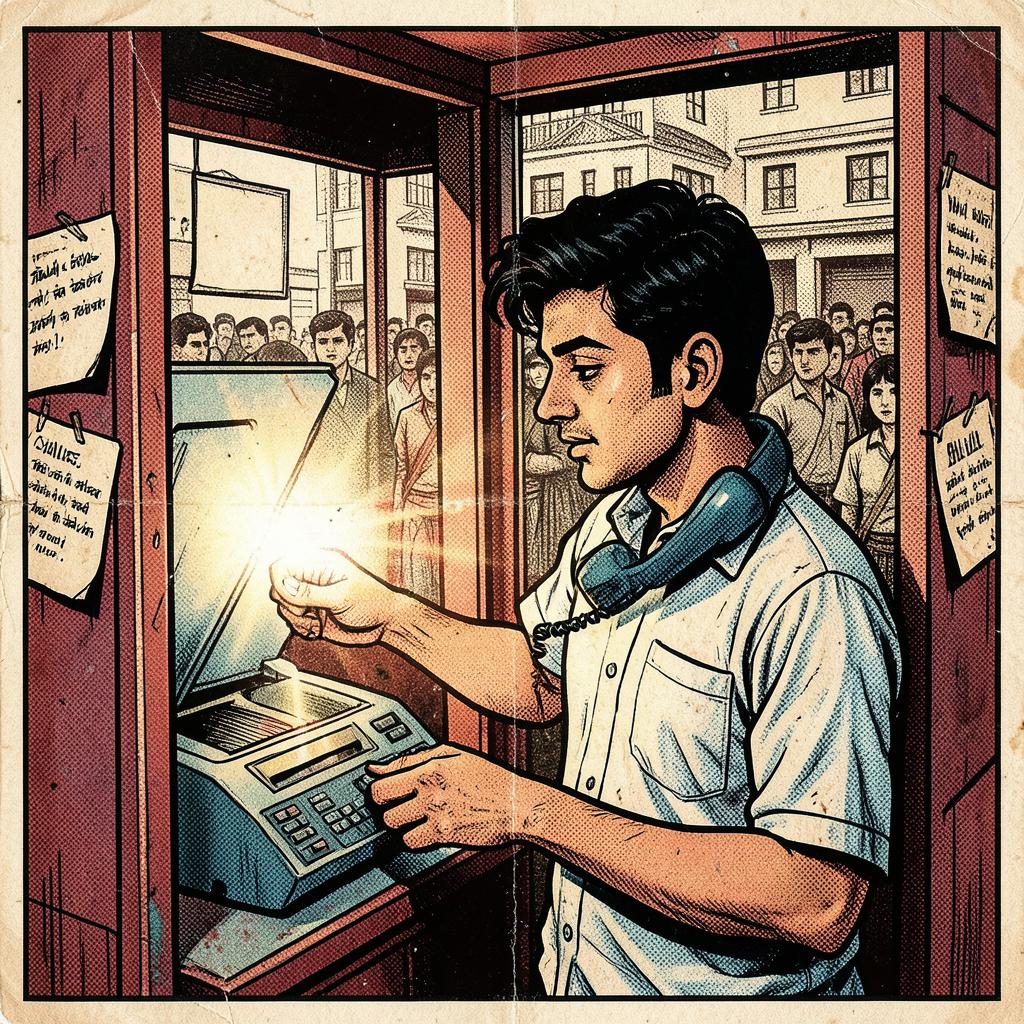
Raghav Tiwari — Raghu to everyone from the Chief Judicial Magistrate's peon to the youngest tea boy at the compound gate — came to the city at fifteen with a tin trunk, an uncle's address on a folded chit, and a bus ticket bought with money his mother had saved from selling eggs. His uncle put him to work in a hardware shop first, and it was there, running errands to the court compound, that Raghu spotted the six-foot gap between the tea stall and the notary's table where a man with a rented photocopier could make an honest, endless living.
That was twenty-two years ago. The photocopier has been replaced twice since, the STD booth added in the mid-nineties and quietly kept running even after mobile phones made it nearly obsolete, because, as Raghu says, “some uncle somewhere still only trusts a landline.” He now runs his six feet of enterprise like a small ministry: photocopies, typed affidavits, notarised translations arranged through a friend, and advice, freely given, on which clerk in which room will accept which excuse for a missed hearing date.
Litigants who have never before set foot in a court building find their way to his counter within minutes of arriving, guided by other litigants, by rickshaw drivers, by the constable at the gate who simply points. He listens to their cases in fragments over the hum of the machine, tells them where to stand, whom to ask for, and hands them a spare sheet of paper if the form runs short, refusing payment for the paper itself as a matter of policy.
He sends money home every month without fail, has done so for twenty-two years, first to his mother and now to his elder brother's family, who have built a proper brick house with a portion of it and speak of Raghu, in his long absence, as “the one who is settled in the city,” a phrase that arrives in letters and is never argued with, only received.
His own case — a small dispute over a strip of ancestral land, filed by a cousin in 2009 — has moved through the very building where he works, hearing by hearing, for so many years that he can tell, from the tone of the peon's voice, whether the judge will even sit that day. He has attended all thirty-one hearings personally, standing at the back of the courtroom in his good shirt, and has never once mentioned the matter to any of the lawyers whose typing and copying keep his booth running.
He eats two lunches most days, one brought by his landlady's daughter at eleven and one bought from the stall at three, a habit the tea boys tease him about relentlessly, and he laughs along with them every time, refilling the toner, calling out change, waving the next person forward.
During the 1998 flooding of the compound, when the lower court files were at risk in the ground-floor room, it was Raghu who organised the shifting of eleven trunks of records to higher ground overnight, unpaid and unasked, working alongside two peons and a junior clerk until four in the morning, and the incident is remembered in the compound to this day chiefly because Raghu refused, then and afterwards, to let anyone thank him for it by name.
He has never married, a fact that mothers of marriageable daughters in his native village raise every time he visits, and which he deflects with the same practised ease he uses on difficult customers — a joke, a shrug, a change of subject towards someone else's good news.
At the end of each working day he pulls down the booth's shutter himself, checks the padlock twice, and walks the fifteen minutes to his rented room past the same tea stall, the same darkened notary's table, and the same courtroom where, on the next date fixed, he will once again be the only person present on his own side of a case that everyone else in that busy compound has, quite naturally, forgotten was ever his.